Published: 2023
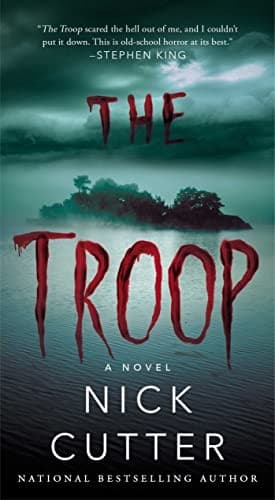
The Troop
Nick Cutter
Key Takeaways
The Troop explores how quickly civilization and morality break down when survival is threatened. Under extreme conditions, social rules collapse and fear exposes humanity’s most primal instincts.
The novel emphasizes the fragility of innocence. Children placed in violent, high-stakes situations are forced into moral choices they are not equipped to handle, accelerating loss of childhood and ethical clarity.
Horror in the story is rooted not only in physical danger, but in biological inevitability. The threat is impersonal, relentless, and indifferent, highlighting humanity’s vulnerability to forces beyond control.
Authority and leadership are tested under pressure. Good intentions and structured rules fail when circumstances become overwhelming, revealing the limits of discipline and preparedness.
The book presents survival as morally corrosive. Staying alive often requires acts that permanently damage identity, conscience, and trust.
Main Ideas
The novel follows a group of adolescent boys on a scouting trip that turns into a fight for survival after they encounter a catastrophic biological threat. What begins as a test of teamwork and self-reliance devolves into isolation, terror, and brutality.
The story blends body horror with psychological and ethical horror, using extreme physical suffering to expose deeper questions about responsibility, leadership, and the cost of survival.
Isolation and Vulnerability
The setting is a remote island, chosen specifically for its separation from society. This isolation removes external help, accountability, and adult protection.
Once cut off from the outside world, the boys are forced to rely solely on each other and their limited training. The wilderness becomes both a physical threat and a psychological amplifier of fear.
Isolation strips away the illusion of safety and exposes how dependent social order is on structure and oversight.
The Biological Threat
At the center of the story is an uncontrollable parasitic infection that spreads rapidly and destroys the human body from within. The threat is invisible, invasive, and impossible to reason with.
Unlike traditional antagonists, the parasite has no motive or intent. Its existence reinforces the idea that nature is indifferent to human suffering.
The body horror serves a thematic purpose, confronting readers with the reality that intelligence and morality offer little protection against biological forces.
Leadership Under Collapse
The boys attempt to maintain order through rules, hierarchy, and leadership roles learned from scouting. Initially, structure provides comfort and direction.
As conditions worsen, leadership becomes contested. Decisions must be made quickly, often with incomplete information, and the consequences are irreversible.
The novel shows how authority shifts from cooperation to coercion when fear dominates. Leadership becomes less about guidance and more about control.
Moral Degradation and Survival Choices
Survival demands increasingly extreme actions. Choices that once seemed unthinkable become necessary under the logic of self-preservation.
The boys are forced to weigh individual survival against group welfare, loyalty against fear, and morality against necessity.
The book suggests that survival does not preserve humanity automatically. Instead, it often requires sacrificing the very values that define it.
Loss of Innocence
The protagonists are children, which intensifies the horror. Their physical vulnerability is matched by emotional unpreparedness.
As violence escalates, childhood identity erodes. Games, camaraderie, and idealism are replaced by paranoia, cruelty, and desperation.
The novel portrays coming of age not as growth, but as traumatic rupture forced by circumstance.
Fear as a Contagion
Fear spreads faster than the infection itself. Panic fractures trust, isolates individuals, and accelerates collapse.
Once fear dominates decision-making, rational thought diminishes. Violence becomes preemptive, and suspicion replaces solidarity.
The story presents fear as a force capable of destroying communities even before physical threats do.
Consequences Without Redemption
The novel offers little comfort or moral resolution. Survival does not restore innocence or guarantee healing.
Those who endure are permanently altered, burdened by memory, guilt, and the knowledge of what they were capable of.
The lack of redemption reinforces the book’s bleak realism and thematic weight.
Final Insight
The Troop is a brutal examination of survival stripped of heroism. Its central message is that when civilization collapses, morality becomes fragile and innocence is unsustainable. By placing children in an unforgiving biological nightmare, the novel confronts readers with the uncomfortable truth that survival often comes at the cost of humanity itself.