Published: 1993
Pages: 376
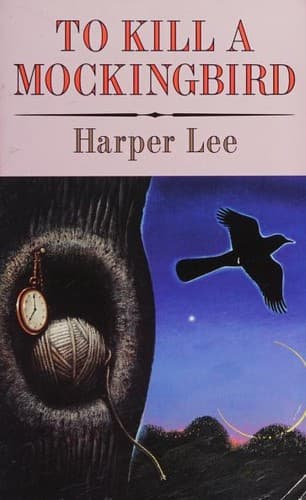
To Kill a Mockingbird
Harper Lee
Key Takeaways
To Kill a Mockingbird explores moral growth, justice, and empathy through the eyes of a child growing up in the racially divided American South. The novel argues that understanding others requires compassion and the willingness to see the world from their perspective.
The book exposes the deep injustice of racial prejudice and how social systems protect inequality. Even when evidence is clear, bias can override truth.
Moral courage often appears quiet and uncelebrated. True integrity lies in doing what is right even when success is unlikely.
Childhood innocence provides a powerful lens for revealing hypocrisy and cruelty in adult society. Growing up involves learning difficult truths without losing one’s sense of fairness.
Overview
Set in the fictional town of Maycomb, Alabama during the 1930s, the novel follows Scout Finch as she reflects on key moments from her childhood. Through everyday experiences and a central courtroom drama, the story examines racism, class division, and the loss of innocence.
The narrative combines a coming-of-age story with a powerful critique of social injustice, showing how individuals are shaped by both family values and community pressure.
Scout’s Childhood World
Scout Finch lives with her older brother Jem and their father, Atticus Finch, a widowed lawyer. The children spend their days exploring the neighborhood, attending school, and inventing games.
Scout begins the story as an intelligent but impulsive child who struggles with social expectations, especially those placed on girls. School introduces her to rigid rules and unfair authority, clashing with the moral lessons she learns at home.
Through Scout’s eyes, the reader experiences Maycomb’s traditions, gossip, and unspoken hierarchies.
Atticus Finch and Moral Guidance
Atticus Finch serves as the moral center of the novel. He teaches his children empathy, self-control, and respect for others, regardless of social standing.
One of his core lessons is that understanding people requires imagining life from their point of view. This principle guides Scout’s moral development throughout the story.
Atticus believes in the rule of law but also recognizes its flaws. He models quiet courage by standing up for justice without hatred or self-righteousness.
Boo Radley and Fear of the Unknown
Boo Radley, a reclusive neighbor, becomes a subject of fascination and fear for Scout and Jem. Rumors portray him as frightening and mysterious.
Over time, the children begin to see signs of Boo’s kindness, such as small gifts and protective actions. Their fear gradually turns into curiosity and empathy.
Boo symbolizes how prejudice is often rooted in ignorance. By the end of the novel, Scout learns that true understanding replaces fear.
The Trial of Tom Robinson
The central conflict of the novel revolves around Atticus defending Tom Robinson, a Black man falsely accused of assaulting a white woman.
Despite clear evidence proving Tom’s innocence, the all-white jury convicts him. The trial exposes the entrenched racism of Maycomb and the failure of justice when prejudice dominates.
Scout and Jem witness the trial from the courtroom balcony, marking a turning point in their understanding of fairness and the adult world.
Loss of Innocence
Jem, more than Scout, struggles with the trial’s outcome. He believes deeply in justice and is devastated when truth fails to prevail.
This moment represents a painful loss of innocence. Jem must reconcile his belief in goodness with the reality of moral corruption.
Scout, while younger, also begins to understand that being morally right does not guarantee victory.
Social Class and Moral Blindness
The novel highlights divisions not only of race but also of class. Poor white families and Black residents occupy different positions in Maycomb’s hierarchy, yet both face discrimination.
Many townspeople believe themselves to be moral while judging others harshly. This hypocrisy reveals how easily people excuse injustice when it benefits them.
Through everyday interactions, the story shows how prejudice becomes normalized and rarely questioned.
Courage Beyond the Courtroom
Courage in the novel is not limited to dramatic acts. Atticus defines courage as perseverance in the face of certain defeat.
Mrs. Dubose, a difficult neighbor, demonstrates personal bravery by overcoming addiction. Her story teaches Jem that courage includes internal struggle.
These moments reinforce that strength is measured by integrity, not aggression.
Boo Radley’s Redemption
In the novel’s climax, Boo Radley saves Scout and Jem from an attack. The feared recluse becomes their protector.
Scout finally meets Boo and realizes how wrong her earlier assumptions were. Standing on his porch, she metaphorically sees the world from his perspective.
This moment completes Scout’s moral journey, turning childhood lessons into lived understanding.
Justice Versus Mercy
After the attack, the town’s sheriff decides not to expose Boo to public scrutiny, choosing mercy over strict legal procedure.
Atticus accepts this decision, recognizing that justice sometimes requires compassion rather than punishment.
The novel suggests that moral wisdom involves knowing when rules should yield to humanity.
Final Insight
To Kill a Mockingbird is a powerful exploration of empathy, justice, and moral growth. Through a child’s perspective, it reveals how prejudice distorts truth and how courage often exists in quiet resistance rather than victory.
The novel ultimately argues that learning to see others clearly—without fear or bias—is essential to both personal maturity and a just society.