Published: 2021
Pages: 480
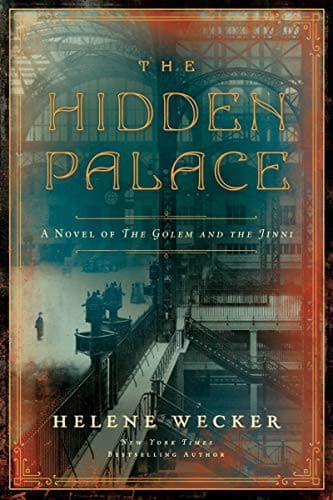
The Hidden Palace
Helene Wecker
Key Takeaways
The Hidden Palace expands the world of The Golem and the Jinni, exploring the tension between immortality and change, freedom and responsibility. At its core, the novel examines what it means to endure in a world defined by time, progress, and human fragility.
Identity is shaped not only by origin, but by choice. Both protagonists struggle with inherited natures that clash with their evolving sense of self.
Power without connection leads to isolation. Immortality, magic, and strength offer little comfort without meaningful relationships.
History is cyclical, and past mistakes echo into the present. Ancient conflicts resurface in modern forms, forcing characters to confront unresolved legacies.
Love, friendship, and community are portrayed as grounding forces that tether supernatural beings to humanity.
Overview
Set primarily in early 20th-century New York, The Hidden Palace continues the intertwined stories of Chava, a golem bound by duty and restraint, and Ahmad, a jinni driven by impulse and longing for freedom. While the first novel focused on their awakening into the human world, this sequel delves deeper into their pasts, origins, and the consequences of their continued existence among mortals.
The novel weaves together immigrant life, ancient Middle Eastern folklore, and the rapid modernization of America, creating a story that is both intimate and expansive.
Chava: Duty, Control, and the Burden of Creation
Chava remains bound by her golem nature: a being created to serve, compelled to obey, and defined by self-denial. Working in a bakery and living quietly, she has learned to suppress her immense strength and desires in order to protect those around her.
Her greatest fear is losing control and harming others, a fear rooted in the knowledge that her creator is dead and no longer able to command or contain her.
Chava’s arc centers on the tension between safety and freedom. She longs for autonomy but believes that restraint is the only moral path available to her. This internal conflict deepens as new revelations about golems and their history challenge her understanding of what she is allowed to want.
Ahmad: Freedom, Memory, and Restlessness
Ahmad, the jinni, struggles with the opposite problem. He is driven by emotion, curiosity, and a fierce desire for independence. His immortality weighs heavily on him as he watches human lives unfold and disappear.
Fragments of his ancient past return to him throughout the novel, revealing unresolved relationships and old enemies. These memories force him to confront the fact that his previous choices contributed to suffering and destruction.
Ahmad’s journey is about responsibility. While he resents limitations, he slowly learns that true freedom requires accountability and care for others.
The Hidden Past and Ancient Conflicts
A central thread of the novel involves uncovering hidden histories—of jinn, golems, and the magicians who sought to control them. These revelations connect the present-day narrative to events centuries earlier in the Middle East.
The resurfacing of an ancient antagonist demonstrates how power, when pursued without humility or ethics, leads to cycles of exploitation and violence.
By linking old-world magic to modern consequences, the novel suggests that progress does not erase history; it carries it forward in altered forms.
Immigration, Modernity, and Change
New York is depicted as a city of constant transformation, mirroring the inner lives of its supernatural inhabitants. Immigrant communities struggle to preserve tradition while adapting to industrialization, social change, and cultural blending.
Chava and Ahmad exist in parallel to these communities—outsiders navigating a world that is not designed for them.
The rise of technology, urban expansion, and shifting social norms heighten the sense of impermanence, making immortality feel less like a gift and more like an ongoing challenge.
Relationships and Chosen Family
Despite their supernatural origins, the most human aspects of the novel emerge through relationships. Friendships, mentorships, and romantic connections provide grounding and meaning.
Chava’s bonds teach her compassion for herself, while Ahmad’s relationships help temper his impulsiveness.
The novel emphasizes chosen family over origin, suggesting that belonging is created through mutual care rather than blood or creation.
Power, Ethics, and Self-Determination
The book interrogates the ethics of creation and control. Magicians who attempt to command supernatural beings reflect broader themes of domination, colonialism, and exploitation.
Both Chava and Ahmad grapple with the question of whether they are bound by their nature or capable of redefining it.
Their choices ultimately affirm that moral agency arises not from perfection or purity, but from continual effort and reflection.
Climax and Resolution
As ancient threats collide with modern lives, Chava and Ahmad are forced to confront their deepest fears: loss of control, loss of freedom, and the possibility of harming those they love.
The resolution emphasizes sacrifice, cooperation, and acceptance of limits. Victory is not absolute, and peace is temporary, reinforcing the novel’s theme that endurance is a process rather than a destination.
Final Insight
The Hidden Palace is a meditation on endurance in a changing world. It explores how beings who outlive eras can still find meaning through connection, responsibility, and care.
By blending folklore with historical realism, the novel argues that survival alone is not enough—what matters is how one chooses to live, love, and restrain power in the face of time.