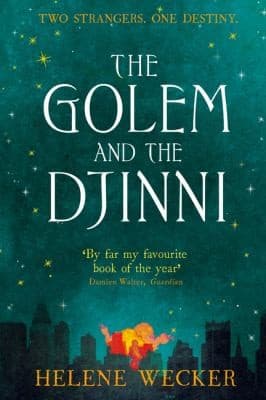
Published: 2014
The Golem And The Djinni
Helene Wecker
Key Takeaways
The Golem and the Jinni explores identity, belonging, and free will through two mythic beings struggling to survive in an unfamiliar world. The novel suggests that identity is shaped not only by origin, but by choice, environment, and relationships.
The story emphasizes the tension between obligation and autonomy. Both protagonists are bound by forces they did not choose, and their central struggle is learning how to live with responsibility while seeking self-determination.
Loneliness is portrayed as a defining human and nonhuman experience. The novel shows that isolation can be as damaging as physical hardship, and that connection is essential for growth and survival.
Cultural heritage is both a source of strength and a constraint. Traditions provide meaning and structure, but can also limit freedom when followed without reflection.
Transformation occurs gradually through empathy and understanding rather than conquest or escape. Growth comes from learning how to live with one’s nature, not from denying it.
Main Ideas
The novel is a historical fantasy set in late nineteenth-century New York City, blending Jewish and Arab folklore with immigrant experience. It follows two supernatural beings, a golem and a jinni, who must navigate human society while concealing their true natures.
Through their parallel journeys, the book examines what it means to be human, how identity is formed, and how individuals reconcile inherited roles with personal desire.
The Golem: Creation and Constraint
The golem is created through magic to serve as an obedient wife, but circumstances leave her alone and unclaimed in the modern world. She is bound by a nature that compels her to serve and anticipate the needs of others.
Her defining trait is heightened empathy. She senses human emotions instinctively, which overwhelms her and ties her identity to the desires of those around her.
The golem’s struggle centers on learning restraint and independence. She must balance her compulsion to serve with the need to protect herself from being consumed by others’ demands.
The Jinni: Freedom and Restlessness
The jinni is a creature of fire and freedom, bound unwillingly into human form by an ancient magical object. Unlike the golem, he resists limitation and resents obligation.
He values independence, pleasure, and self-expression, but his impulsiveness and pride isolate him from others. His confinement forces him to confront vulnerability and dependence for the first time.
The jinni’s journey involves accepting limits without losing identity. He must learn that freedom does not require isolation, and that connection does not necessarily mean captivity.
Immigration, Otherness, and Belonging
Both protagonists mirror the immigrant experience. They exist between worlds, belonging fully to neither their origins nor their adopted home.
New York City is portrayed as a place of opportunity and alienation, where cultures coexist but do not always understand one another. The supernatural elements parallel the emotional reality of cultural displacement.
The novel suggests that belonging is not achieved by assimilation alone, but through mutual recognition and shared experience.
Tradition, Power, and Responsibility
The story engages deeply with folklore and tradition, showing how ancient rules continue to exert influence in a modern setting.
Magical knowledge and power are shown to carry ethical responsibility. Characters who seek control without understanding consequences cause harm, both intentionally and unintentionally.
Tradition is neither villainized nor idealized. Instead, it is portrayed as something that must be engaged with consciously rather than followed blindly.
Connection and Mutual Recognition
When the golem and the jinni meet, their differences highlight their shared struggles. Each recognizes in the other a form of captivity that humans cannot see.
Their relationship is built on understanding rather than similarity. They do not resolve each other’s problems, but provide perspective and balance.
Through this connection, both characters gain a clearer sense of self and agency.
Choice Versus Fate
A central question of the novel is whether nature determines destiny. Both beings are created or constrained by forces beyond their control, yet their choices still matter.
The book argues that meaning arises from how one responds to limitation, not from the absence of it.
Free will is portrayed not as total freedom, but as the ability to choose one’s actions within constraint.
Final Insight
The Golem and the Jinni is a reflective exploration of identity, belonging, and moral responsibility. By using mythic figures to examine deeply human struggles, the novel suggests that freedom is not found in escaping one’s nature, but in understanding it and choosing how to live with it. Its lasting power lies in its portrayal of connection as the bridge between isolation and selfhood.