Published: 2004
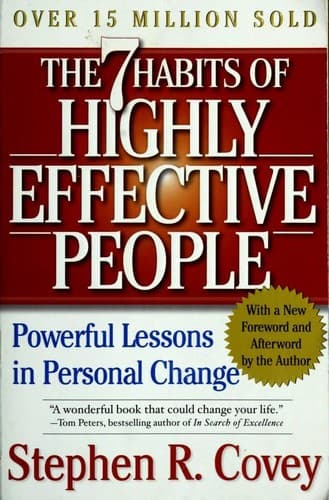
The 7 Habits of Highly Effective People
Stephen R. Covey, Sean Covey
Key Takeaways
The Power of Compound Interest
Small habits are the compound interest of self-improvement. Just as money grows through compounding, the effects of habits multiply as they are repeated over time. Improving by just 1 percent each day leads to results that are roughly 37 times better by the end of the year.
The Plateau of Latent Potential
Progress is rarely linear. Habits often seem ineffective until a critical threshold is crossed. This phase, sometimes called the Valley of Disappointment, is where most people quit even though the work is accumulating beneath the surface rather than being wasted.
Identity Over Outcomes
Lasting behavior change is rooted in identity change. Motivation may start a habit, but identity sustains it. Every action is a vote for the type of person you want to become. The goal is not just to achieve results, but to become someone who naturally achieves them.
Environment Is the Invisible Hand
People tend to overestimate willpower and underestimate the influence of their environment. Self-control is easiest when it is not required. Highly disciplined individuals design environments that make good habits obvious and bad habits difficult.
The Goldilocks Rule
Peak motivation occurs when tasks are just slightly beyond current ability. Habits that are too easy become boring, and habits that are too hard lead to discouragement. The ideal challenge sits right in the middle.
Main Ideas
The core idea of the book is that habits are the atoms of our lives. These small, routine behaviors combine to form systems that determine long-term success or failure. James Clear emphasizes that people do not rise to the level of their goals; they fall to the level of their systems.
The Three Layers of Behavior Change
Behavior change operates on three distinct levels.
Outcomes
This level focuses on results, such as losing weight or writing a book.
Processes
This level involves habits and systems, such as following a workout routine or writing daily.
Identity
This level concerns beliefs, self-image, and worldview. Most people start with outcomes, but lasting change begins with identity. Instead of saying, “I am trying to quit smoking,” successful change comes from saying, “I am not a smoker.”
The Habit Loop
Every habit follows a four-step feedback loop.
Cue
The cue triggers the brain to initiate a behavior.
Craving
The craving provides motivation. What is desired is not the habit itself, but the change in state it produces.
Response
The response is the actual behavior performed.
Reward
The reward satisfies the craving and reinforces the habit, teaching the brain which behaviors are worth repeating.
The First Law: Make It Obvious
Many habits operate unconsciously. Awareness is the first step to change.
Habit Scorecard
Writing down daily behaviors helps expose habits that normally go unnoticed.
Implementation Intentions
Vague intentions fail. Clear plans succeed. A useful format is: I will perform this behavior at this time in this location.
Habit Stacking
New habits are easier to build when attached to existing ones. The formula is: After the current habit, I will perform the new habit.
Designing for Cues
The more visible a habit cue is, the more likely the habit will occur. Placing medication next to the bathroom sink is more effective than relying on memory.
The Second Law: Make It Attractive
Habits are driven by dopamine. Anticipation, not just reward, fuels motivation.
Temptation Bundling
Pair a habit you want to do with a habit you need to do, such as listening to a favorite podcast only while exercising or doing chores.
The Influence of Others
People naturally adopt habits that are socially rewarded. Joining a group where the desired behavior is normal makes the habit more appealing and sustainable.
The Third Law: Make It Easy
Behavior follows the path of least resistance.
The Law of Least Effort
People gravitate toward options that require the least energy. Reducing friction increases the likelihood that a habit will occur.
The Two-Minute Rule
New habits should take less than two minutes to start. Reading becomes reading one page. Exercising becomes putting on gym shoes. Mastering the start is more important than the duration.
Master the Decisive Moment
Small decisions shape the direction of the next several hours. Choosing to put on workout clothes or deciding where to eat are moments that disproportionately influence outcomes.
The Fourth Law: Make It Satisfying
Immediate rewards reinforce repetition.
Immediate vs. Delayed Returns
Humans are wired to value immediate gratification. To maintain habits with long-term benefits, there must be some form of short-term satisfaction.
Habit Tracking
Tracking progress visually creates motivation and reinforces consistency. The goal becomes maintaining the streak.
Never Miss Twice
Missing once is normal. Missing twice begins a new habit. The priority is returning to the habit as quickly as possible after a setback.
The Downside of Good Habits
Habits can lead to stagnation if left unchecked. Once behaviors become automatic, improvement can stall. To continue growing, habits must be paired with deliberate practice and regular reflection. Clear recommends periodic reviews to ensure habits remain aligned with long-term identity and values.
Final Insight
Atomic Habits shows that meaningful change is not the result of radical transformation, but of small actions repeated consistently. By focusing on identity, systems, and environment, habits become a powerful tool for continuous improvement and long-term success.