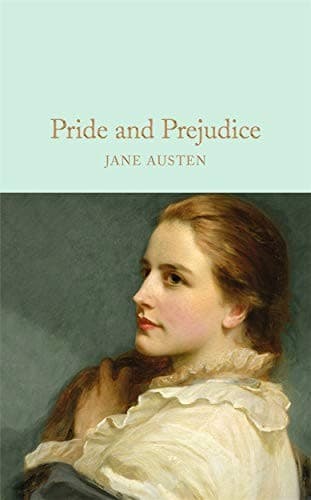
Published: 1813
Pages: 496
Pride and Prejudice
Jane Austen
Key Takeaways
Pride and Prejudice explores how first impressions, social class, and personal pride can distort judgment and hinder meaningful relationships. Through misunderstandings and emotional growth, the novel argues that self-awareness and humility are essential for love and moral development.
The story emphasizes the importance of balancing reason and emotion. Characters who rely solely on pride, prejudice, or impulse suffer, while those who learn to reflect and adapt achieve happiness.
Social class and marriage are central concerns, but Austen critiques the idea that wealth and status alone determine worth. True respect and love must be grounded in character, integrity, and mutual understanding.
Personal growth is possible through honest self-examination. The novel shows that recognizing one’s own flaws is difficult but transformative.
Overview of the Story
Set in early 19th-century England, Pride and Prejudice follows the Bennet family, particularly Elizabeth Bennet, as they navigate issues of marriage, money, and morality in a rigidly class-conscious society. With five daughters and no male heir, Mrs. Bennet is determined to secure advantageous marriages for her children.
The arrival of wealthy newcomers, including Charles Bingley and his friend Fitzwilliam Darcy, disrupts the social life of the neighborhood and sets the stage for romantic entanglements, misunderstandings, and personal revelations.
Elizabeth Bennet: Wit, Intelligence, and Prejudice
Elizabeth Bennet is the novel’s central character and moral lens. She is intelligent, witty, and values independence of thought. However, she is also quick to judge and strongly influenced by first impressions.
Elizabeth forms an early dislike of Mr. Darcy after observing his aloof manners and hearing negative accounts of his character. Her confidence in her own judgment leads her to accept these impressions without sufficient evidence.
Over the course of the novel, Elizabeth is forced to confront her own prejudice and recognize that her assumptions have blinded her to the truth.
Mr. Darcy: Pride, Reserve, and Integrity
Fitzwilliam Darcy initially appears proud, cold, and dismissive, particularly toward those of lower social standing. His behavior reinforces Elizabeth’s negative opinion and earns him widespread dislike.
Despite his reserved nature, Darcy possesses strong moral principles and a deep sense of responsibility. His pride is rooted not in cruelty, but in social insecurity and habit.
As the story progresses, Darcy undergoes significant personal growth. He learns to communicate with humility, act generously without seeking recognition, and overcome his own pride.
Love, Misunderstanding, and Growth
The central romance between Elizabeth and Darcy develops through conflict rather than instant attraction. Their relationship is shaped by miscommunication, wounded pride, and flawed perceptions.
Darcy’s first marriage proposal, though sincere, is delivered in a way that emphasizes social inequality and offends Elizabeth. Her rejection forces him to reflect on his behavior.
Elizabeth later receives a letter from Darcy explaining his actions, including his role in separating Bingley and Jane Bennet. This letter becomes a turning point, prompting Elizabeth to reassess her judgments.
Jane Bennet and Charles Bingley: A Contrast
Jane Bennet and Charles Bingley represent a more straightforward and gentle love story. Both are kind, agreeable, and inclined to think well of others.
Their relationship is temporarily disrupted by social interference and misunderstanding, particularly Darcy’s belief that Jane does not truly care for Bingley.
In contrast to Elizabeth and Darcy, Jane and Bingley’s conflict arises from excessive politeness and emotional restraint rather than pride or prejudice.
Marriage and Social Critique
Austen presents several models of marriage to critique social norms. Charlotte Lucas marries for financial security rather than love, illustrating the limited options available to women.
The marriage of Lydia Bennet and George Wickham exposes the dangers of impulsiveness and moral irresponsibility. Though socially acceptable, it is portrayed as unstable and shallow.
Through these relationships, Austen questions marriages based solely on money, status, or physical attraction, advocating instead for unions grounded in respect and understanding.
Reputation, Morality, and Society
Social reputation plays a powerful role in the novel. A single mistake can damage a family’s standing, particularly for women.
Darcy’s intervention to save Lydia’s reputation demonstrates his moral growth and genuine care for Elizabeth, even at personal cost.
Austen critiques a society that prioritizes appearances over character, while still acknowledging the real consequences of social judgment.
Resolution and Transformation
By the end of the novel, both Elizabeth and Darcy have changed significantly. Elizabeth acknowledges her own prejudice and gains greater humility. Darcy learns to temper his pride and communicate with sincerity.
Their second engagement is marked by mutual respect, emotional maturity, and equality. The resolution reinforces the novel’s message that love requires growth, honesty, and self-knowledge.
Final Insight
Pride and Prejudice is more than a romantic novel; it is a study of character, judgment, and social constraints. Jane Austen shows how pride and prejudice distort perception, but also how reflection and integrity can lead to personal transformation. The novel endures because its insights into human behavior, relationships, and self-deception remain deeply relevant, offering a timeless reminder that true understanding begins with humility.