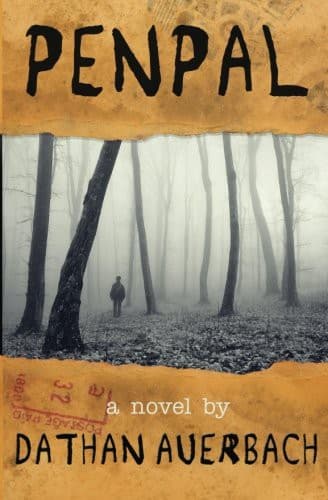
Published: 2012
Pages: 252
Penpal
Dathan Auerbach
Key Takeaways
Penpal presents horror as something that develops slowly and quietly rather than through sudden shock. The novel shows how small, seemingly harmless moments can accumulate into lifelong trauma.
Memory is unreliable and fragmented, especially when shaped by fear. The story demonstrates how childhood experiences can be misunderstood at the time and only later reassembled into something horrifying.
Evil is depicted as patient and obsessive rather than chaotic. The antagonist’s persistence is more disturbing than overt violence, suggesting that terror lies in inevitability rather than surprise.
Childhood vulnerability is central to the horror. The book emphasizes how limited understanding and trust leave children exposed to dangers they cannot name or defend against.
The past is inescapable. Trauma does not fade with time but resurfaces when patterns finally become clear, forcing confrontation with what was previously hidden.
Main Ideas
The novel is structured as a series of interconnected memories recalled by an adult narrator attempting to understand his childhood fears. What initially appears to be a collection of unsettling but unrelated incidents gradually reveals a single, coherent threat.
The book relies on psychological horror rather than spectacle. Its power comes from implication, absence, and the slow realization of meaning rather than explicit description.
Fragmented Memory and Narrative Structure
The story unfolds nonlinearly, mirroring how memory functions under trauma. Events are recalled out of order, with gaps and distortions that obscure their true significance.
Each memory appears isolated at first, often framed as an unsettling childhood anecdote. Only later does the narrator recognize the connections between them.
This structure forces the reader to experience the same delayed comprehension as the narrator, reinforcing the novel’s sense of creeping dread.
Childhood Innocence and Misinterpretation
As a child, the narrator lacks the framework to interpret danger accurately. Unusual events are rationalized as coincidence, imagination, or normal childhood fear.
Adults in the story are either unaware or dismissive, unintentionally reinforcing the child’s vulnerability. Their reassurances prevent deeper investigation and allow danger to persist.
The novel highlights how innocence does not protect children, but instead limits their ability to recognize threat.
Obsession and Control
The antagonist is characterized by fixation rather than impulsive violence. His actions are methodical, repetitive, and long-term.
This obsession creates a sense of inevitability. The horror lies not in sudden attack, but in the knowledge that someone is always present, watching and waiting.
Control is exerted psychologically before it becomes physical, blurring the line between fear and familiarity.
Silence, Absence, and Implication
Much of the novel’s horror exists in what is not shown. Critical events occur off-page or are only partially remembered.
This absence forces the reader to imagine what happened, often creating a more powerful effect than explicit description.
The book demonstrates how implication can be more unsettling than detail, allowing fear to expand beyond the page.
Trauma and Adult Realization
As the narrator matures, fragments of memory begin to align. What once seemed unrelated takes on new meaning through adult understanding.
This realization is devastating rather than relieving. Knowledge does not undo trauma, but instead confirms its depth and permanence.
The adult narrator’s clarity comes too late to prevent harm, reinforcing the novel’s fatalistic tone.
Inevitability and Helplessness
The book suggests that some horrors cannot be escaped once set in motion. Small decisions, chance encounters, and missed warnings accumulate into irreversible outcomes.
Helplessness is not portrayed as weakness, but as a consequence of circumstance and limited perspective.
This sense of inevitability gives the novel its bleak emotional weight.
Final Insight
Penpal is a quiet, devastating exploration of obsession, memory, and childhood vulnerability. Its central message is that horror often hides in plain sight, unfolding slowly through misunderstanding and silence. By reconstructing fear through fragmented recollection, the novel shows how trauma is formed not only by violence, but by the gradual realization that danger was always closer than it appeared.